Alaska Cruise Ports Guide
Alaska cruises visit some of the most dramatic scenery on Earth — tidewater glaciers, temperate rainforests, gold rush towns, and waters teeming with whales and eagles. But not all ports are equal, and knowing what to expect at each stop makes a huge difference.
This guide covers every major port and scenic cruising day on Alaska cruise itineraries. No itinerary visits all of them — use this to evaluate which ports matter most to you.
At a Glance
| Port | Type | Rating | Known For |
|---|---|---|---|
| Juneau | Port of call | ⭐⭐⭐⭐⭐ | Glaciers, whale watching, state capital |
| Skagway | Port of call | ⭐⭐⭐⭐⭐ | Gold Rush history, White Pass Railway |
| Ketchikan | Port of call | ⭐⭐⭐⭐½ | Indigenous culture, salmon, Creek Street |
| Sitka | Port of call | ⭐⭐⭐⭐½ | Russian heritage, wildlife, authenticity |
| Icy Strait Point | Port of call | ⭐⭐⭐⭐ | Whale watching, bears, zipline |
| Seward | Embarkation/disembarkation | ⭐⭐⭐⭐½ | Kenai Fjords, gateway to Denali |
| Hubbard Glacier | Scenic cruising | ⭐⭐⭐⭐⭐ | Largest tidewater glacier, calving |
| Inside Passage | Scenic cruising | ⭐⭐⭐⭐⭐ | 500-mile waterway, wildlife, rainforest |
| Victoria, BC | Port of call | ⭐⭐⭐⭐ | Butchart Gardens, British charm |
Juneau — Alaska’s Capital City
Rating: ⭐⭐⭐⭐⭐ | Time in port: Typically 8–10 hours
Juneau is the only US state capital you can’t drive to — it’s accessible only by sea or air. That isolation means pristine wilderness starts right at the city limits. Mendenhall Glacier is just 20 minutes from the cruise dock, making it the most accessible glacier experience on any Alaska itinerary.
Must-Do Experiences
- Mendenhall Glacier — Walk to Nugget Falls (1.4 miles roundtrip, free) for a view of the glacier face with a waterfall in the foreground. For a deeper experience, book a helicopter tour to land on the glacier or explore ice caves inside it.
- Whale watching — Juneau’s waters are home to large populations of humpback whales from May through September. Half-day tours run $150–200/pp and have near-100% sighting rates in summer.
- Juneau Icefield helicopter tour — Land on the massive Juneau Icefield covering 1,500 square miles. Dog sledding on the glacier is available as an add-on. This is a once-in-a-lifetime experience but expensive ($300–500/pp).
- Tracy Arm Fjord — Full-day boat excursion to Sawyer Glacier through a narrow fjord with waterfalls and icebergs. Only possible from Juneau.
Free & Easy Options
- Walk the downtown waterfront and visit the Alaska State Capitol building
- Red Dog Saloon — historic frontier bar on the waterfront
- Juneau-Douglas Bridge viewpoint for glacier and mountain panoramas
- Browse the shops on South Franklin Street
Watch Out For
- Crowds — Juneau is the busiest Alaska port, with up to 7 cruise ships and 10,000+ passengers on peak days. Book excursions early and go ashore as soon as the ship docks.
- Weather — Juneau gets about 60 inches of rain per year. Helicopter tours are weather-dependent and may be cancelled. Have a backup plan.
- Excursion prices — Juneau has the most expensive excursions of any Alaska port due to demand.
Useful Links
- Travel Juneau — Official Visitor Bureau
- Mendenhall Glacier Visitor Center — USFS
- Juneau Whale Watching & Wildlife Viewing
- Juneau Points of Interest — Alaska.org
Ingrid’s Pick
The Mendenhall Glacier helicopter tour with ice cave exploration. If budget is a concern, the free walk to Nugget Falls is still excellent. Whale watching is a close second — the sighting rates in Juneau are the best in Alaska.
Skagway — Gold Rush Town
Rating: ⭐⭐⭐⭐⭐ | Time in port: Typically 8–10 hours
Skagway was the gateway to the Klondike Gold Rush in 1897–98, when 100,000 prospectors passed through on their way to the Yukon. Today the entire downtown is a National Historic District preserved to look much as it did in the 1890s. With a permanent population of about 1,100, this is the smallest Alaska cruise port — but it packs a punch.
Must-Do Experiences
- White Pass & Yukon Route Railway — A narrow-gauge railway climbing 2,865 feet in 20 miles through mountains, past waterfalls, and along cliff edges. Built during the Gold Rush in 1898, it’s one of the most scenic train rides in the world. The Summit Excursion (3.5 hours, ~$150/pp) is the most popular option.
- Dog sledding on a glacier — Helicopter to a glacier camp where you ride a sled pulled by Alaskan huskies. Available May through September.
- Chilkoot Trail — The historic trail Gold Rush miners used. Full hike is multi-day, but the first few miles from Dyea (9 miles from Skagway) are doable as a day hike.
- Yukon Suspension Bridge — Drive to the Canadian border for views of Tutshi Canyon from a 57-foot suspension bridge.
Free & Easy Options
- Walk Broadway Street — the main drag lined with restored 1890s buildings, now shops and restaurants
- Gold Rush Cemetery — final resting place of Soapy Smith and Frank Reid, central figures in Skagway’s wildest chapter
- Lower Reid Falls — a pretty waterfall just past the cemetery, 1.5-mile walk from town
- Junior Ranger programs at the Klondike Gold Rush National Historical Park Visitor Center (free, great for kids)
Watch Out For
- Everything costs money — Skagway has very few free activities beyond walking the town. The railway, dog sledding, and Yukon tours all require paid excursions.
- Tiny town, big crowds — With only a few blocks of downtown, 3,000+ cruise passengers can make it feel packed. The train fills up fast — book well in advance.
- Canadian border — Some excursions cross into Canada (Yukon). Bring your passport.
Useful Links
- Skagway Official Visitor Guide
- White Pass & Yukon Route Railway
- Klondike Gold Rush National Historical Park — NPS
Ingrid’s Pick
The White Pass Railway is non-negotiable — it’s one of the best excursions in all of Alaska cruising. If you can only do one paid activity in Skagway, this is it.
Ketchikan — Salmon Capital of the World
Rating: ⭐⭐⭐⭐½ | Time in port: Typically 6–8 hours
Ketchikan is usually the first or last Alaska port on southbound/northbound itineraries. It sits on the western edge of Revillagigedo Island and has the richest concentration of Tlingit Indigenous art and culture in Southeast Alaska. The town hugs the shoreline — you can walk the entire downtown in 30 minutes.
Must-Do Experiences
- Creek Street — The iconic wooden boardwalk built on stilts over Ketchikan Creek. Originally the red-light district during the timber and fishing boom, it’s now galleries, shops, and the quirky Dolly’s House Museum (a preserved brothel-turned-museum).
- Totem Heritage Center & Totem Bight State Park — See the world’s largest collection of 19th-century Tlingit and Haida totem poles. Totem Bight (10 miles north) has poles in a rainforest setting with a reconstructed clan house.
- Misty Fjords National Monument — A 2.3-million-acre wilderness of granite cliffs, waterfalls, and deep fjords accessible only by floatplane or boat. The floatplane tour ($250–300/pp) is spectacular.
- Salmon fishing — Ketchikan is legendary for salmon. Charter fishing trips run 4–6 hours and target all five Pacific salmon species depending on the month.
Free & Easy Options
- Walk Creek Street and watch salmon jumping upstream (July–September)
- Explore the waterfront boardwalk and fish market
- Visit the Southeast Alaska Discovery Center (small admission fee) for exhibits on temperate rainforest ecology
- Deer Mountain trail — moderately steep hike starting from downtown with mountain views
Watch Out For
- Rain — Ketchikan receives nearly 13 feet (155 inches) of rain per year, making it the wettest city in Alaska and one of the wettest in the US. Rain gear is essential, not optional.
- Shorter port time — Ketchikan often gets 6 hours instead of the 8–10 at Juneau/Skagway. Plan accordingly.
- Jewelry shops — Downtown is heavy on cruise-oriented jewelry stores. Walk past them to find the authentic galleries and culture.
Useful Links
- Visit Ketchikan — Official Visitors Bureau
- Misty Fjords National Monument — USFS
- Ketchikan Museums (Totem Heritage Center)
Ingrid’s Pick
Creek Street is free and unmissable. If you have budget for one excursion, the Misty Fjords floatplane tour is breathtaking. For culture lovers, the totem pole sites are the most meaningful Indigenous experience in Alaska.
Sitka — Russia’s Alaska
Rating: ⭐⭐⭐⭐½ | Time in port: Typically 6–8 hours
Sitka was the capital of Russian America from 1808 until the US purchased Alaska in 1867 — the actual transfer ceremony took place at Castle Hill in Sitka. Today it’s the most authentically Alaskan port, with less tourist infrastructure and more genuine small-town character. Sitka faces the open Pacific Ocean rather than the protected Inside Passage, so the scenery and wildlife are different from other ports.
Must-Do Experiences
- Sitka National Historical Park — The site of the 1804 Battle of Sitka between Russian colonists and Tlingit warriors. A rainforest trail lined with totem poles leads to the battleground. The visitor center has excellent exhibits on Tlingit culture and Russian colonial history.
- Fortress of the Bear — A rescue sanctuary for orphaned brown bears. You’ll see bears up close in a naturalistic setting — far more intimate than distant bear-viewing excursions.
- Alaska Raptor Center — A rehabilitation facility for injured bald eagles, hawks, and owls. Watch eagles being trained for release back into the wild.
- Sea otter and whale watching — Sitka’s Pacific-facing waters are home to large sea otter rafts and humpback whales. Boat tours are less crowded than Juneau’s.
Free & Easy Options
- Walk to Castle Hill — the site where the Russian flag was lowered and the American flag raised in 1867
- St. Michael’s Cathedral — a Russian Orthodox cathedral (rebuilt after a 1966 fire) with original 19th-century icons
- Sheldon Jackson Museum — Alaska’s oldest museum with an outstanding Native art collection (small admission)
- Walk along the harbor and watch fishing boats unload the day’s catch
Watch Out For
- Tender port — Depending on the ship and dock availability, Sitka may require tendering (small boats ferrying you to shore). This adds 20–30 minutes each way and can be cancelled in rough weather.
- Limited infrastructure — Fewer restaurants and shops than Juneau or Ketchikan. That’s part of the charm, but don’t expect extensive dining options.
- Spread-out attractions — Some sights (like the Raptor Center) are a couple of miles from downtown. The free shuttle or a taxi helps.
Useful Links
- Visit Sitka — Official Visitor Bureau
- Sitka National Historical Park — NPS
- Alaska Raptor Center
- Fortress of the Bear
Ingrid’s Pick
Sitka National Historical Park is the best free attraction at any Alaska port. The combination of rainforest, totem poles, and genuine history is unmatched. Fortress of the Bear is a wonderful add-on, especially for families.
Icy Strait Point — Wilderness & Whales
Rating: ⭐⭐⭐⭐ | Time in port: Typically 6–8 hours
Icy Strait Point is a purpose-built cruise destination on Chichagof Island, about 50 miles west of Juneau. Opened in 2004, it’s operated by the Huna Tlingit people of the nearby village of Hoonah (population ~760). Unlike the other ports, there’s no town to explore — it’s a nature-focused destination centered around wildlife, adventure activities, and Tlingit cultural experiences.
Must-Do Experiences
- Whale watching at Point Adolphus — The waters around Icy Strait have one of the highest concentrations of humpback whales in the world. Point Adolphus, across Icy Strait from the port, is considered one of the top whale-watching locations in all of Alaska.
- Bear viewing on Chichagof Island — Chichagof has one of the densest brown bear populations in the world. Guided excursions take you into the forest and along salmon streams where bears feed.
- ZipRider — Once billed as the world’s longest zipline (1.5 miles), it descends 1,300 feet with views of Icy Strait and the surrounding mountains.
- Kayaking — Paddle through calm waters with views of eagles, sea otters, and potentially whales.
Free & Easy Options
- Walk the restored 1912 Hoonah Packing Company cannery, now a museum and cultural center
- Beach walk along the shoreline
- Browse the small shops run by Tlingit artisans
- Wildlife viewing from shore — eagles are everywhere
Watch Out For
- Not a real town — Icy Strait Point was built for cruise passengers. If you want authentic Alaskan town character, this isn’t it. Hoonah village is a short walk away but very small.
- Excursion-dependent — Without booking an activity, there isn’t much to fill a full port day. The free areas are limited.
- Weather sensitivity — Whale watching and bear viewing are both weather-dependent. Have flexible expectations.
Useful Links
Ingrid’s Pick
The whale watching here is the best in Alaska — better even than Juneau. If you’re at Icy Strait Point, this should be your top priority. The bear viewing is a close second.
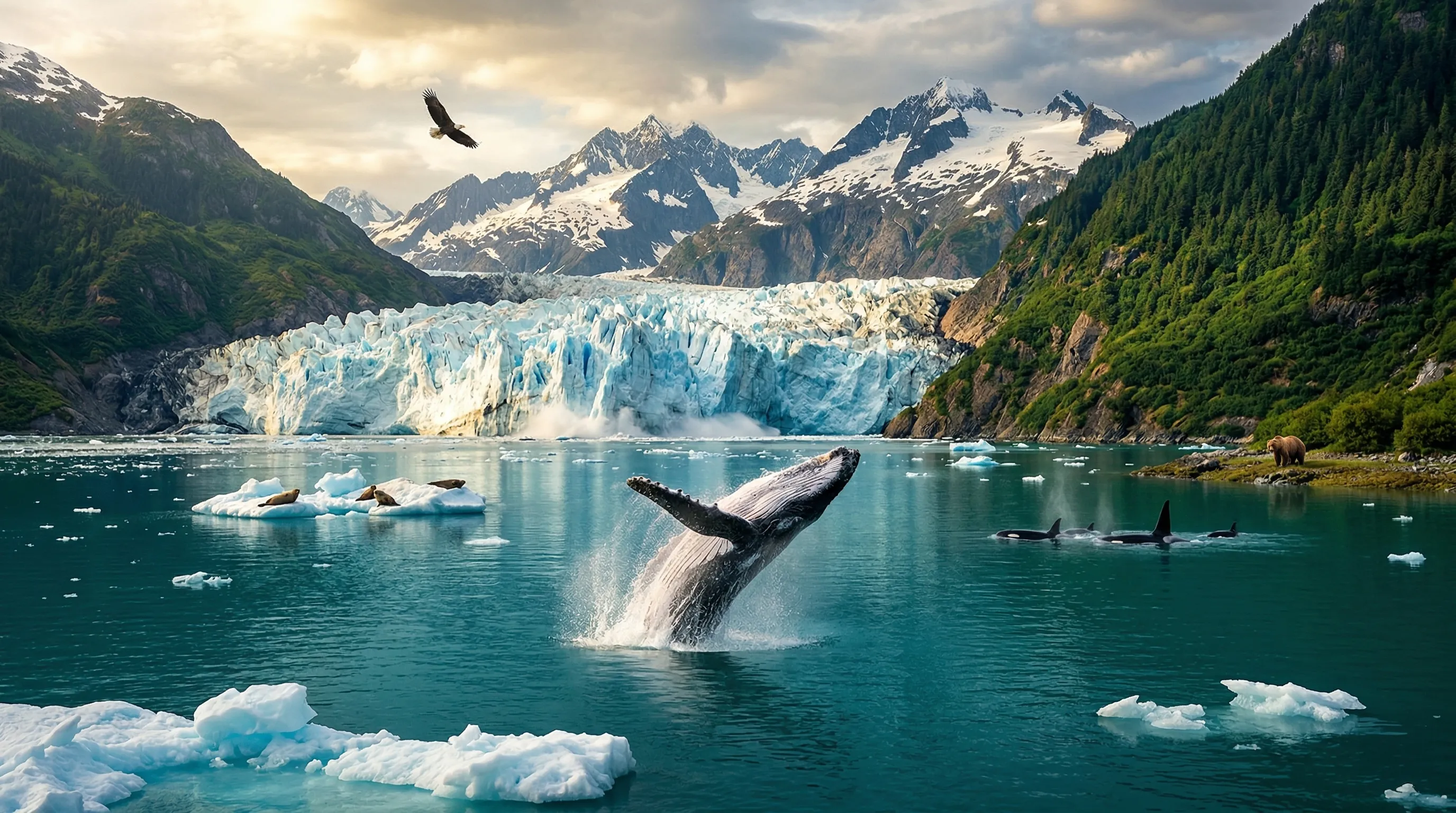
Hubbard Glacier — Scenic Cruising Day
Rating: ⭐⭐⭐⭐⭐ | No port stop — viewed from the ship
Hubbard Glacier is a scenic cruising day, not a port of call. Your ship sails to the glacier face and spends 2–4 hours in the area while you watch from the deck or your balcony. It’s one of the most dramatic days on any Alaska cruise.
What Makes Hubbard Special
- Size — Hubbard is the longest tidewater glacier in North America. The ice face is 6 miles wide and rises 400 feet above the waterline (with another 500+ feet below the surface).
- It’s advancing — Unlike most glaciers worldwide, Hubbard is actually growing. It’s been advancing for over 100 years.
- Calving — Throughout the day, massive chunks of ice break off the glacier face and crash into the water. These calving events are loud, dramatic, and unpredictable — keep your camera ready.
- Wildlife — Humpback whales, harbor seals resting on icebergs, bald eagles, and sea otters are commonly spotted in the area.
Tips for Hubbard Glacier Day
- Wake up early — The ship usually arrives at Hubbard early morning. Set an alarm.
- Balcony cabin advantage — If you have a balcony, you can watch the glacier in peace while others crowd the top decks. This alone justifies the upgrade for Alaska.
- Dress warmly — Even in July/August, the air temperature near the glacier drops significantly. Bring a warm jacket, hat, and gloves for extended viewing on deck.
- Both sides of the ship — The ship usually rotates to give both sides a view. Don’t worry about port vs starboard.
- Binoculars — Essential for spotting wildlife on icebergs and calving events on the far side of the glacier face.
Useful Links
Which Itineraries Include Hubbard Glacier?
Only one-way itineraries between Vancouver and Seward include Hubbard Glacier. Roundtrip sailings from Seattle or Vancouver do not visit Hubbard — they cruise the Inside Passage instead (also spectacular, but different).
Inside Passage — Scenic Cruising Day
Rating: ⭐⭐⭐⭐⭐ | No port stop — viewed from the ship
The Inside Passage is a 500-mile protected waterway running along the coast of Southeast Alaska, British Columbia, and Washington State. It’s often described as the quintessential Alaska cruise experience — the part that makes an Alaska cruise different from simply flying to Alaska.
What to Expect
- Temperate rainforest — Dense green forests come right down to the water’s edge on both sides. This is the Tongass National Forest, the largest in the United States.
- Glaciers and icebergs — Several glaciers are visible from the ship, and floating icebergs are common.
- Wildlife — Orcas, humpback whales, dolphins, bears along the shoreline, and bald eagles are regularly spotted. Keep binoculars handy all day.
- Narrow channels — Some sections bring the ship surprisingly close to shore. The scale of the mountains and forests is overwhelming.
Tips for Inside Passage Day
- Stay on deck — Resist the temptation to stay in the spa or casino. This is the day to be outside.
- Forward-facing lounges — Two70, observation lounges, or the ship’s forward areas offer the best views.
- All-day experience — Unlike Hubbard Glacier (concentrated viewing), the Inside Passage unfolds over many hours. Check in periodically throughout the day.
- Photography — Overcast days actually produce better photos of green forests and water than bright sunny days (less glare, richer colors).
Useful Links
Victoria, BC — The Canadian Jewel
Rating: ⭐⭐⭐⭐ | Time in port: Typically 4–6 hours (often evening arrival)
Victoria is the capital of British Columbia and sits on the southern tip of Vancouver Island. It appears on roundtrip Seattle itineraries as the final stop before returning home. The port is right in the Inner Harbour, surrounded by the Parliament Buildings, the Fairmont Empress Hotel, and a lively waterfront.
Must-Do Experiences
- Butchart Gardens — A 55-acre garden complex that’s been operating since 1904. The Sunken Garden (built in a former limestone quarry) is the most photographed spot. Located 14 miles from the port, you’ll need transportation ($30–50/pp for shuttle, or book a cruise excursion).
- Inner Harbour walk — The waterfront promenade connects the Parliament Buildings, Royal BC Museum, and Empress Hotel. Street performers and artisan vendors line the path in summer.
- Afternoon tea at the Fairmont Empress — A Victoria tradition since 1908. Reservations required and it’s not cheap ($80+/pp), but it’s a memorable experience.
- Whale watching — Victoria’s waters are excellent for orca sightings from May through October.
Free & Easy Options
- Walk the Inner Harbour and Fisherman’s Wharf (floating homes, food kiosks, sea lions)
- Explore Chinatown — the oldest in Canada and second oldest in North America
- Beacon Hill Park — 200-acre park with gardens, ponds, and views of the Juan de Fuca Strait
- Browse Government Street shops and galleries
Watch Out For
- Short port time — Many Alaska itineraries arrive in Victoria in the evening with only 4–6 hours. Plan your priorities carefully.
- Not Alaska — Victoria is charming but it’s a cosmopolitan Canadian city. If you’re expecting wilderness, this will feel out of place.
- Butchart Gardens distance — The gardens are a 30-minute drive from port. Factor in transportation time from your limited hours.
Useful Links
Ingrid’s Pick
If you have time for only one thing, walk the Inner Harbour — it’s free, beautiful, and right at the port. If you have 4+ hours, Butchart Gardens is worth the trip. Skip the Empress tea unless it’s something you’ve always wanted to do — the price-to-value ratio is low.
Seward — Gateway to Kenai Fjords & Denali
Rating: ⭐⭐⭐⭐½ | Embarkation/disembarkation port
Seward is a small town of about 2,800 people at the head of Resurrection Bay on the Kenai Peninsula. It serves as the turnaround port for one-way Alaska cruises (Vancouver to Seward or reverse). Most passengers arriving in Seward either fly out of Anchorage (2.5 hours north) or continue on a land tour to Denali National Park.
Must-Do Experiences
- Kenai Fjords National Park boat tour — A full-day or half-day cruise into Kenai Fjords to see tidewater glaciers (Aialik Glacier, Holgate Glacier), humpback whales, orcas, puffins, sea lions, and sea otters. This is one of the best wildlife cruises in Alaska.
- Exit Glacier — The most accessible glacier in Kenai Fjords National Park. An easy 1-mile trail leads to a viewpoint, and the Harding Icefield trail (8.2 miles roundtrip, strenuous) offers breathtaking views of the vast icefield feeding the glacier.
- CruiseTour to Denali — Royal Caribbean offers 9–13 night packages combining the cruise with an overland journey to Denali National Park, Talkeetna, and Anchorage. This is the complete Alaska experience.
- Alaska SeaLife Center — A marine wildlife research center in Seward with exhibits on seals, sea otters, puffins, and Steller sea lions.
Free & Easy Options
- Walk the Seward waterfront and small-boat harbor
- Two Lakes Park — an easy loop trail through spruce forest
- Browse the shops and restaurants on 4th Avenue
- Waterfront Park — views of Resurrection Bay and surrounding mountains
Watch Out For
- Not a walkable cruise port — Seward’s cruise dock is separated from the main town. A shuttle or taxi is needed.
- Transit day logistics — If your cruise ends in Seward, you’ll need transportation to Anchorage airport (2.5-hour drive or scenic train ride). Book in advance.
- Kenai Fjords tours book up — The popular boat tours sell out in peak season. Reserve well ahead if adding a pre/post-cruise day.
Useful Links
Ingrid’s Pick
If you have a pre or post-cruise day in Seward, the Kenai Fjords boat tour is absolutely worth it — it’s like getting a bonus Alaska cruise day. Exit Glacier is a great free option if you have a rental car. For the ultimate Alaska trip, add a CruiseTour to Denali.
Packing Tips for Alaska Ports
No matter which ports you visit, Alaska weather is unpredictable. Here’s what to always have with you going ashore:
- Rain jacket — Not optional. Even in July, every port can get rain.
- Layers — Temperatures range from 45°F to 65°F (7°C to 18°C) in summer. A base layer, fleece, and waterproof outer shell cover most conditions.
- Waterproof shoes or hiking boots — Many trails and boardwalks are wet. Flip-flops won’t cut it.
- Binoculars — Essential for whale watching, glacier viewing, and wildlife spotting.
- Camera with zoom lens — Wildlife is often at a distance. A phone camera alone may disappoint.
- Sunscreen — Alaska summer days have 18+ hours of daylight. Sunburn is real even on cloudy days.
- Bug spray — Mosquitoes can be fierce near forests and trails.
Ingrid’s Final Take
Every Alaska port has something special, but if I had to rank my must-visit ports:
- Juneau — The complete Alaska experience in one port (glaciers, whales, culture)
- Skagway — The White Pass Railway alone makes it worth visiting
- Hubbard Glacier — The most dramatic scenic cruising day in the world
- Sitka — The most authentically Alaskan port with the best free attractions
- Ketchikan — Creek Street and Indigenous culture are unmissable
When choosing between itineraries, prioritize the ports that match your interests. Glacier lovers should pick itineraries with Hubbard Glacier. Culture seekers should look for Sitka and Ketchikan. Wildlife enthusiasts should prioritize Icy Strait Point and Juneau.
One more thing: Don’t over-schedule your port days. Some of the best Alaska moments happen when you’re just standing on deck watching an eagle fly past, or sitting in a coffee shop in Skagway listening to a local tell stories about winter. Leave room for the unexpected.
Last updated: April 2026